Database

EmbryoAPA

Alternative Polyadenylation in Mammalian Preimplantation Embryonic Development

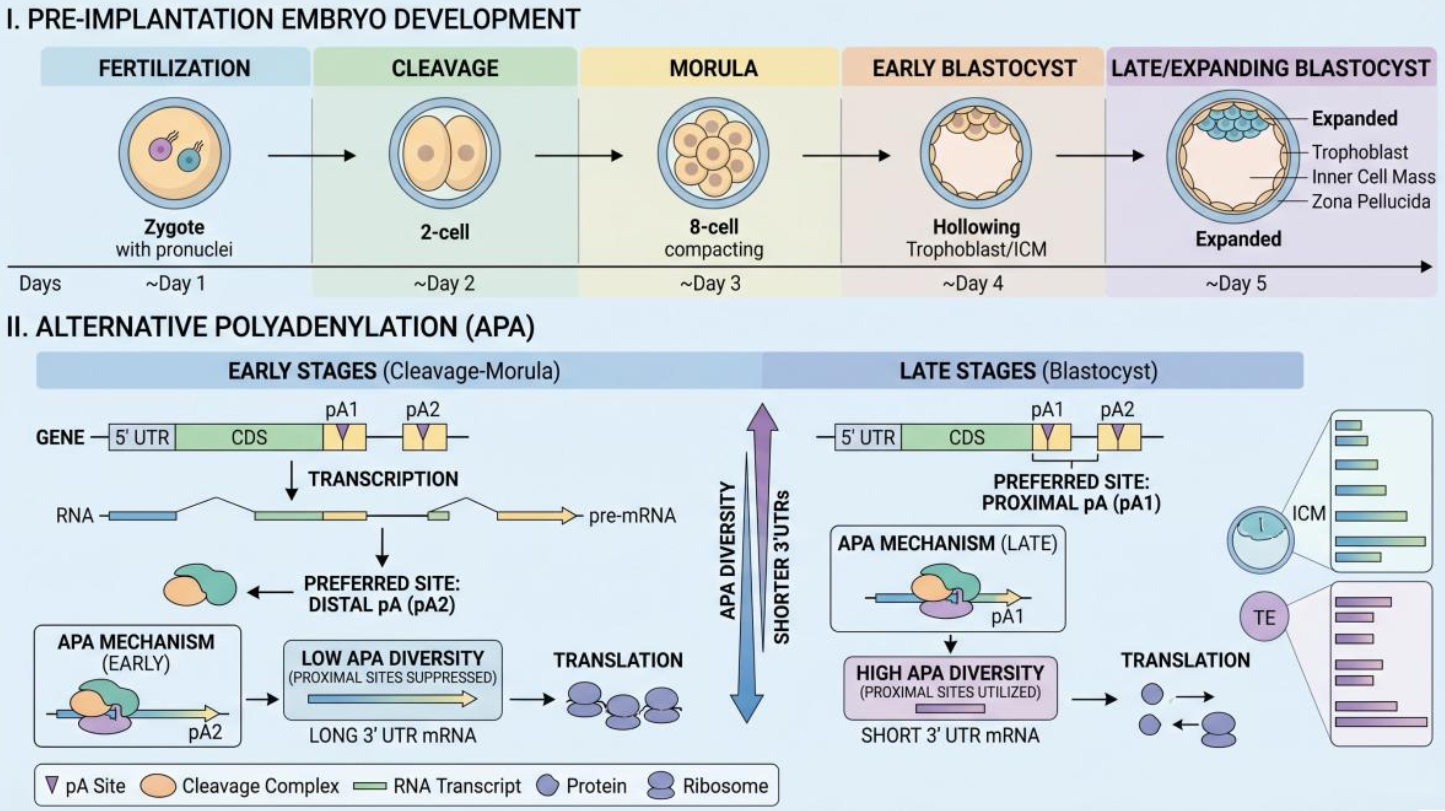
EmbryoAPA is a specialized database that systematically curates alternative polyadenylation (APA) events across multiple stages of preimplantation development in mammals. By integrating both bulk and single-cell RNA-seq data, it comprehensively characterizes the dynamic APA landscape throughout development, serving as a key resource for deciphering how APA shapes the embryonic transcriptome.
APA in Embryogenesis
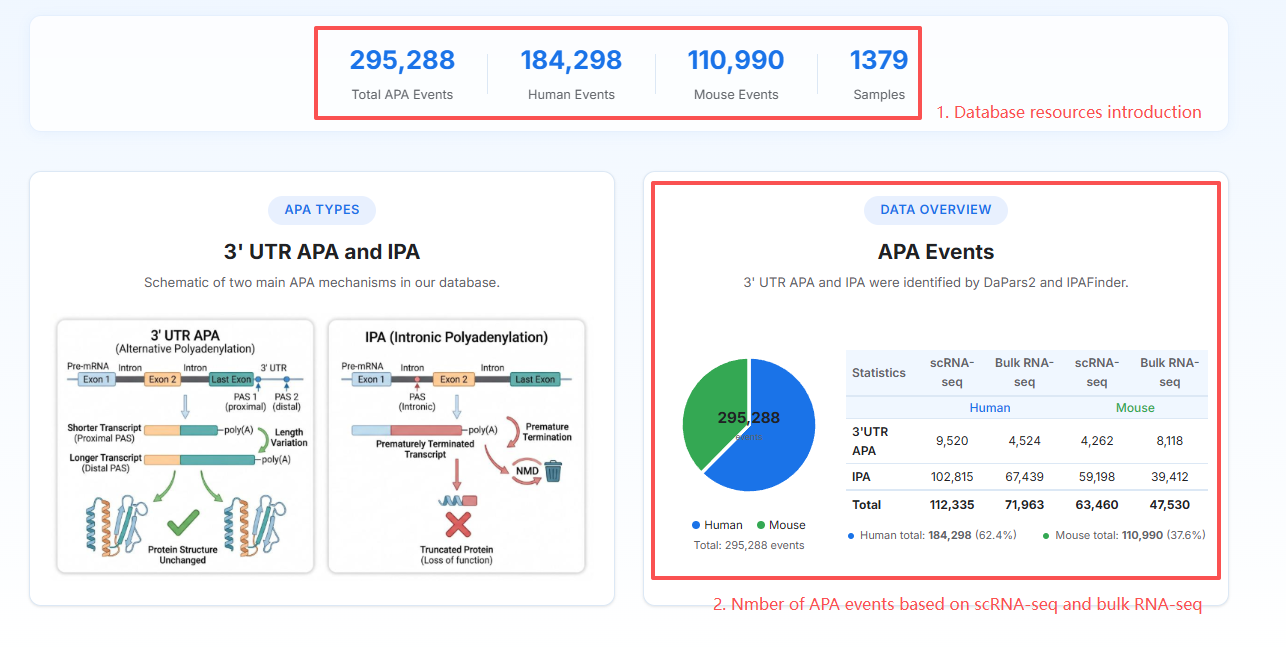
295,288 Total APA Events
184,298 Human Events
110,990 Mouse Events
1379 Samples
APA Types

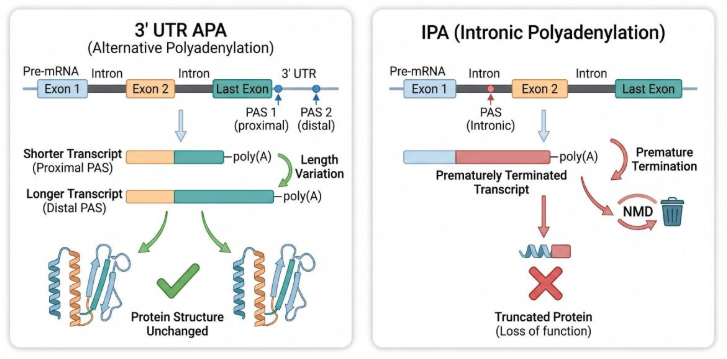
3' UTR APA and IPA

Schematic of two main APA mechanisms in our database.
3' UTR APA and IPA mechanisms
Data Overview

APA Events

3' UTR APA and IPA were identified by DaPars2 and IPAFinder.

295,288
events
Human
Mouse
Total: 295,288 events
Statistics scRNA-seq Bulk RNA-seq scRNA-seq Bulk RNA-seq
Human Mouse
3'UTR APA 9,520 4,524 4,262 8,118
IPA 102,815 67,439 59,198 39,412
Total 112,335 71,963 63,460 47,530
Human total: 184,298 (62.4%) Mouse total: 110,990 (37.6%)
Query

APA Browser

Search and browse alternative polyadenylation events by gene across different developmental stages.

APA Events

Browse all APA events across species and stages

APA Events

Click to explore →

Differential APA Events

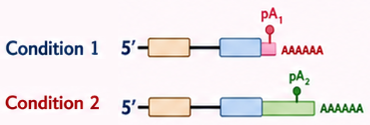
Compare APA usage between developmental stages or conditions
Differential APA Events

Click to explore →

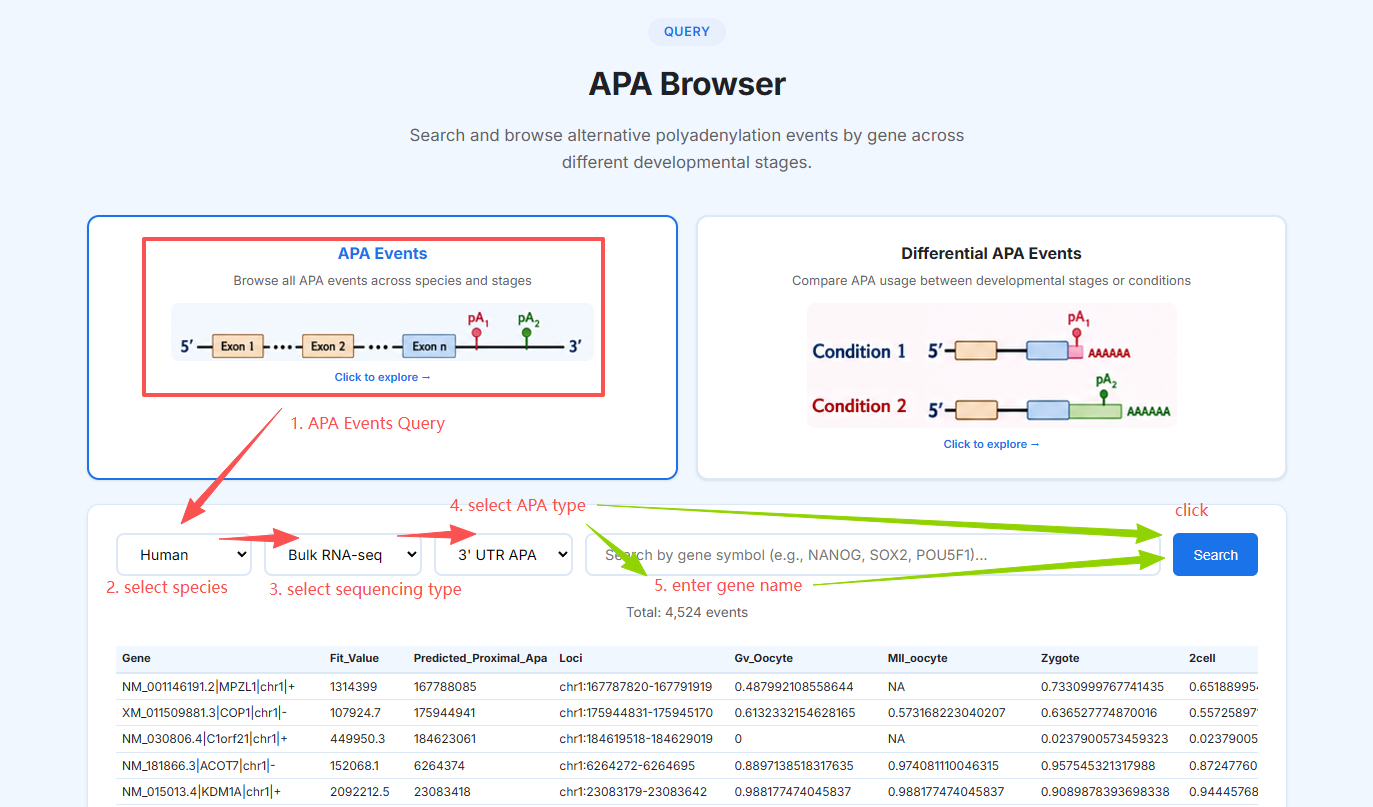
Select Species, Sequence Type, and APA Type, then click Search to view APA events.
Analysis

Clustering Analysis

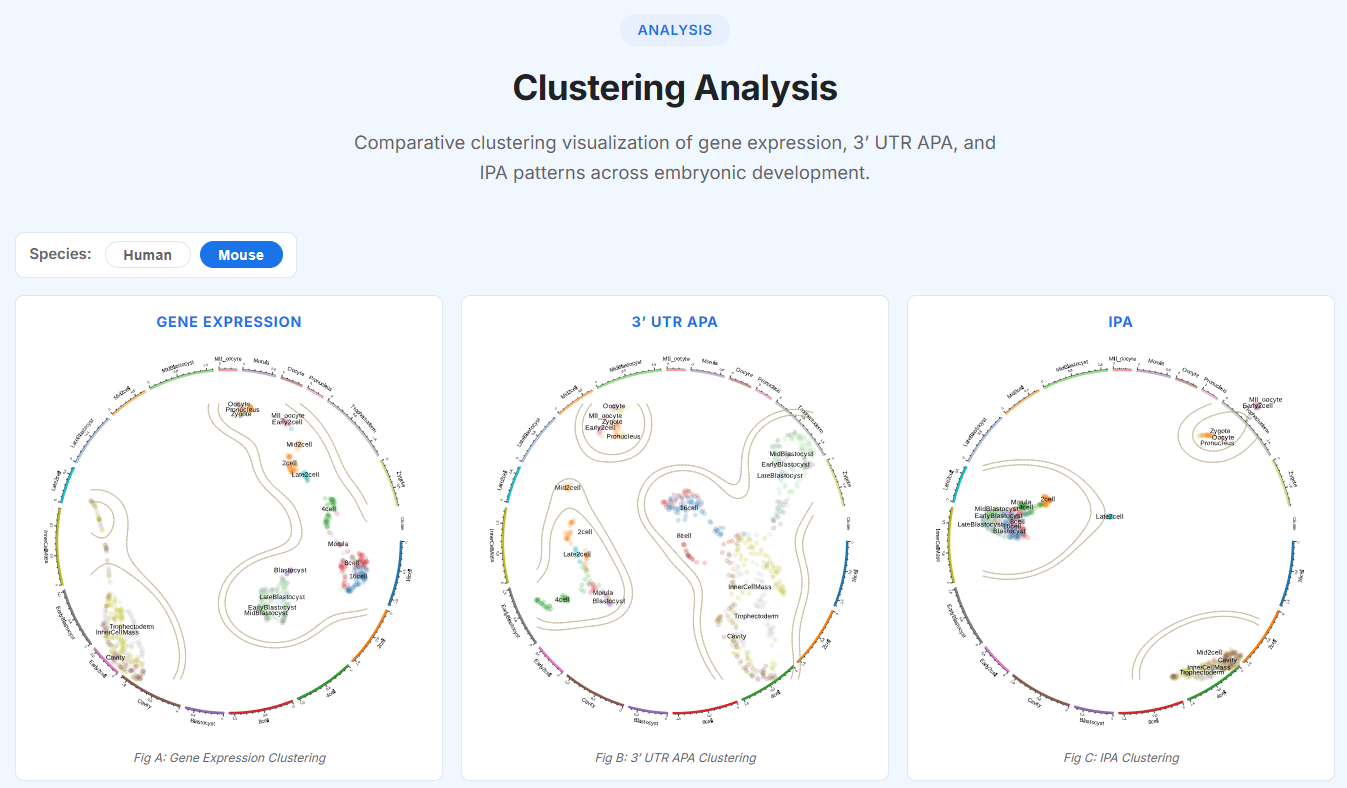
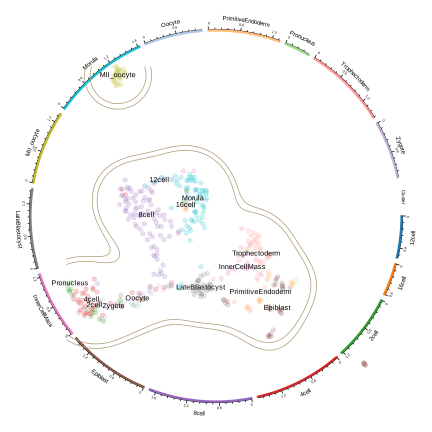
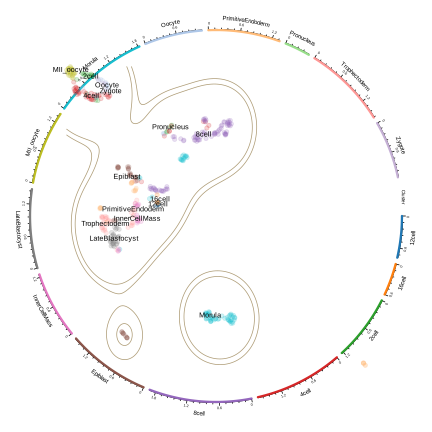
Comparative clustering visualization of gene expression, 3’ UTR APA, and IPA patterns across embryonic development.
Species:
Gene Expression
Gene Expression Clustering
Fig A: Gene Expression Clustering
3’ UTR APA
3' UTR APA Clustering
Fig B: 3’ UTR APA Clustering
IPA
IPA Clustering
Fig C: IPA Clustering
Time Series

Temporal Dynamics

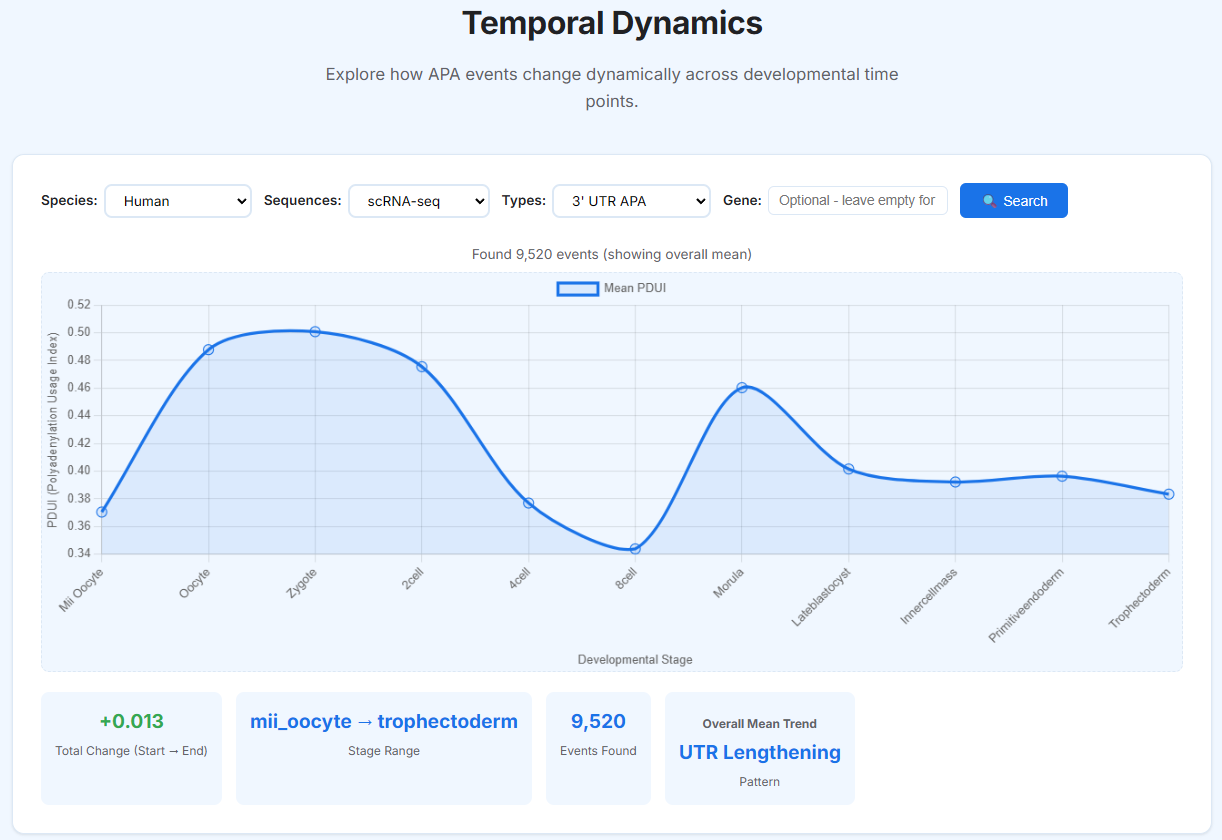
Explore how APA events change dynamically across developmental time points.

Database

Data

Browse statistics and download APA event datasets organized by species, sequencing type, and developmental stage.

📊Statistics

📥Data Download

APA and IPA events after limma correction and ≥60% detection filtering in any stage.

🧑
Human
Homo sapiens

APA events based on bulk RNA-seq and scRNA-seq data across all pre-implantation embryonic developmental stages.

⬇ Download human.rar (40.4 MB)
🐭
Mouse
Mus musculus

APA events based on bulk RNA-seq and scRNA-seq data across all pre-implantation embryonic developmental stages.

⬇ Download mouse.rar (20.4 MB)
Support

Help & Documentation

Get started with EmbryoAPA. Browse tutorials, FAQs, and detailed documentation.

📖Quick Start Guide

1
Browse APA Events

Navigate to APA Browser, select species, sequencing type, and APA type, then search by gene symbol.

2
Compare Differential Events

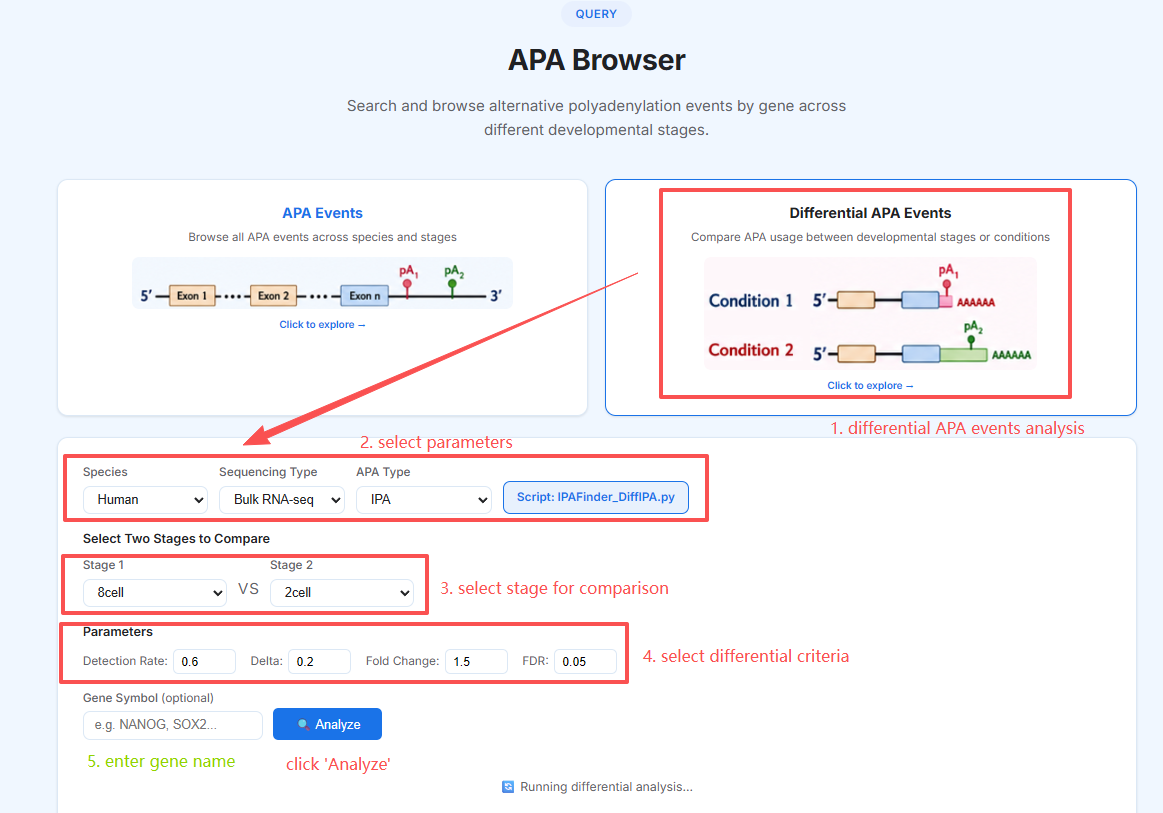
In APA Browser, switch to "Differential APA Events", select two developmental stages and parameters to identify significant changes.

3
Explore Clustering Patterns

Visit Heterogeneity to compare gene expression, 3' UTR APA, and IPA clustering across species.

4
Track Temporal Dynamics

Use Temporal Dynamics to visualize how APA usage changes across developmental stages.

5
Download Data

Go to Data to access statistics and download filtered APA event datasets.

📘Instructions

Screenshots of each module to help you get familiar with the EmbryoAPA interface.

🏠 Home Page
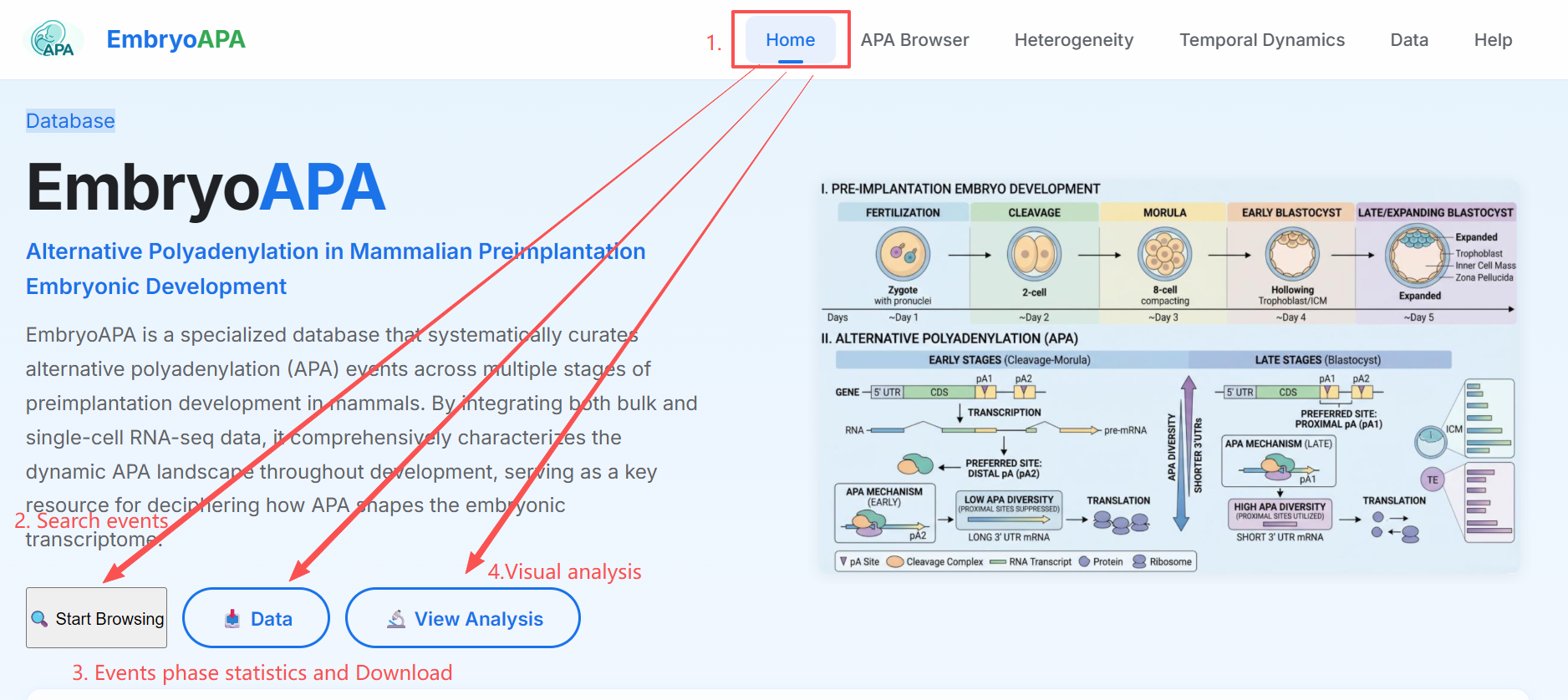
EmbryoAPA Homepage Overview
Fig.1 Overview of the EmbryoAPA homepage. The homepage displays a summary of the database, including the total number of 3' UTR APA and IPA events for human and mouse, and a doughnut chart showing species distribution.
EmbryoAPA Homepage Statistics
Fig.2 Homepage statistics and event type distribution. The pie chart shows the proportions of 3' UTR APA and IPA events detected in human and mouse preimplantation embryos.

🔍 APA Browser

APA Browser - Identified APA Events
Fig.3 The APA Events sub-module interface. Users can filter by species, sequencing type, and APA type, then search by gene symbol to retrieve stage-specific PDUI or IPUI values.
APA Browser - Search Results
Fig.4 Search results displayed in a paginated table. Each row represents an APA event with gene symbol, chromosome position, 3' UTR length, mean PDUI/IPUI values across stages, and associated sample counts.
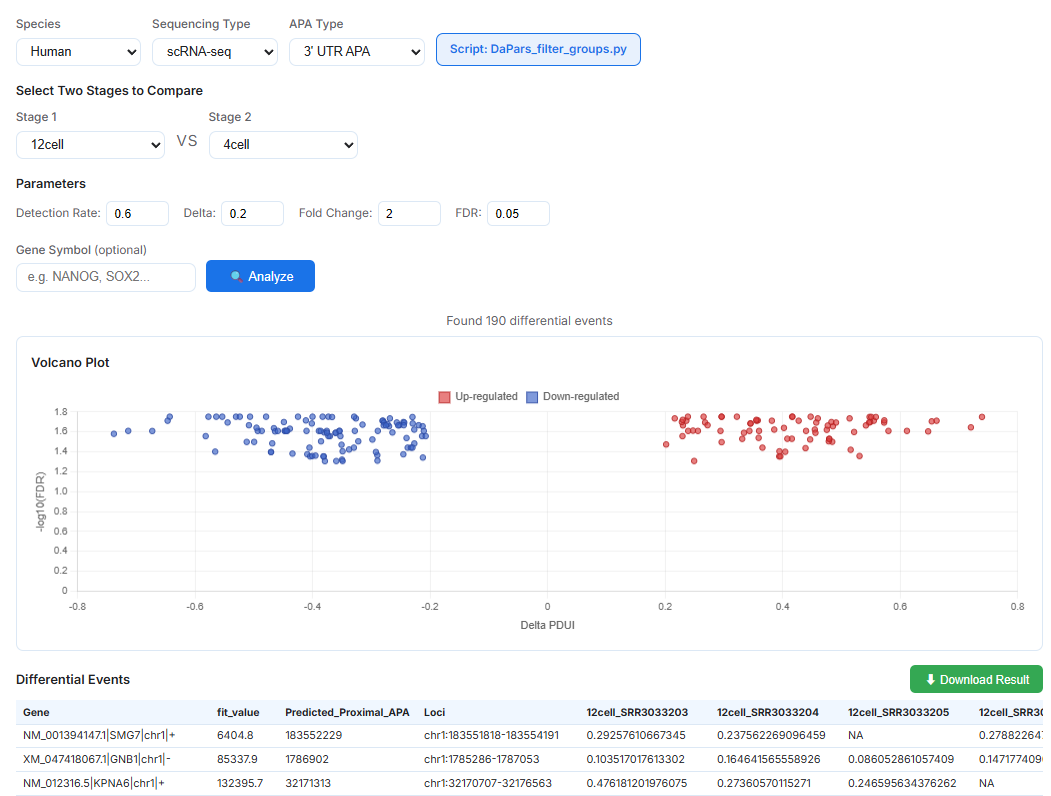
APA Browser - Differential APA Events
Fig.5 The Differential APA Events sub-module. Users select two developmental stages and set parameters (Detection Rate, Delta, Fold Change, FDR) to identify significantly changing APA events between stages. Detection Rate: Event is detected in at least 60% of samples per selected stage.
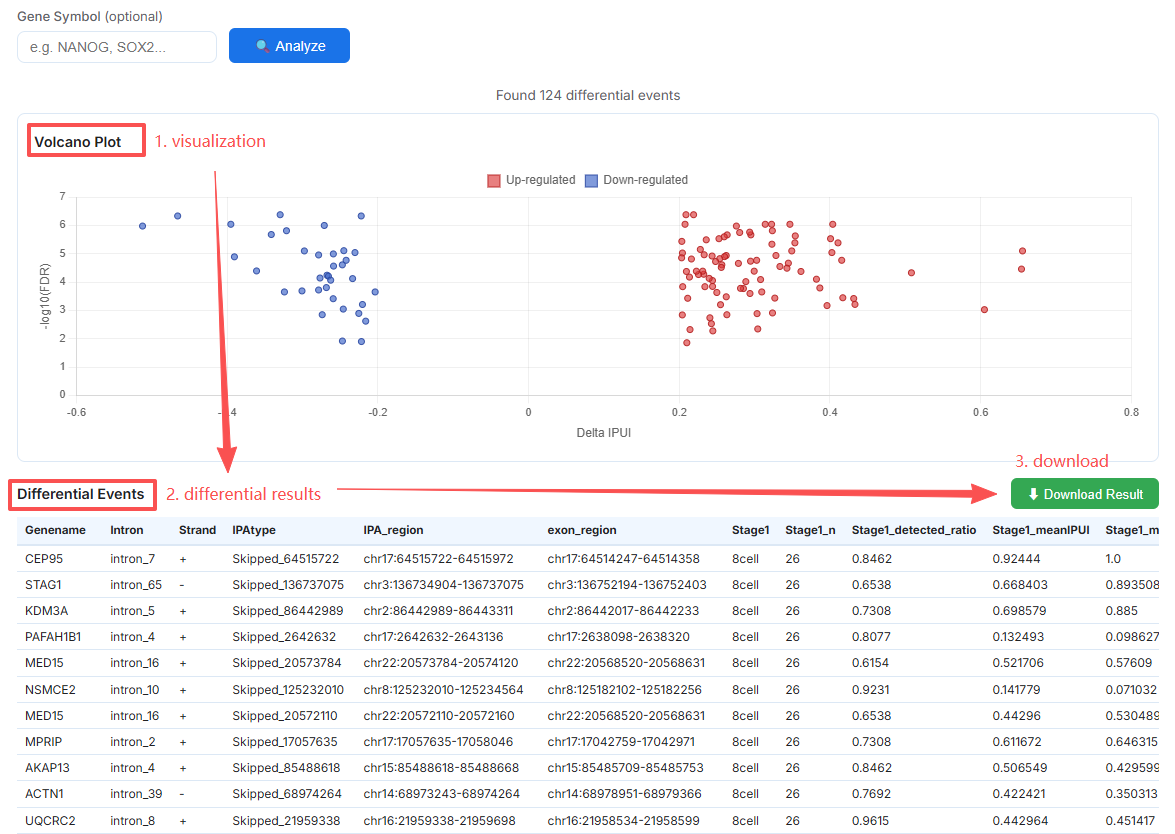
APA Browser - Volcano Plot
Fig.6: Differential APA analysis results visualized as a volcano plot. Each point represents one APA event; red or blue points indicate significant upregulation or downregulation of distal poly(A) site usage (or IPA isoform usage), respectively. Results can be downloaded as TSV files.

🔬 Clustering Analysis (Heterogeneity)
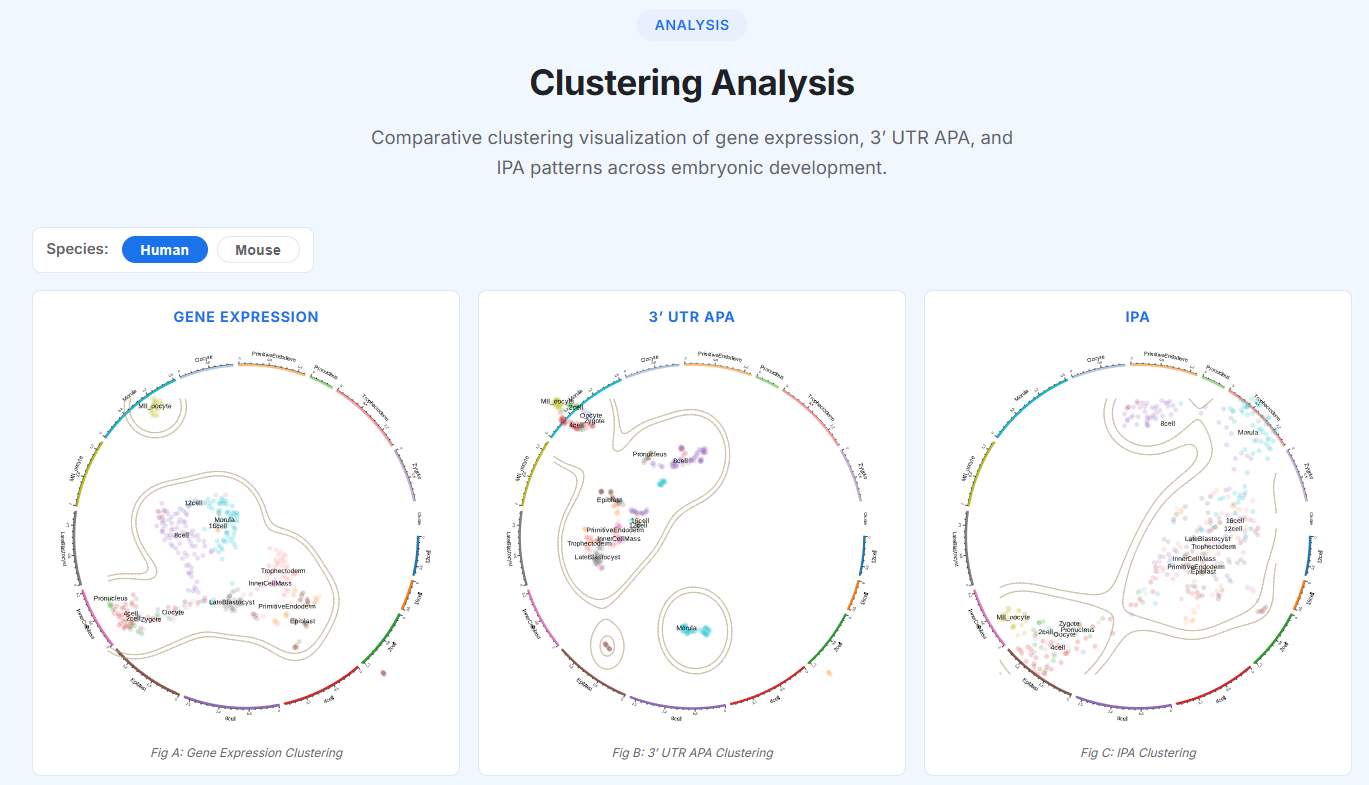
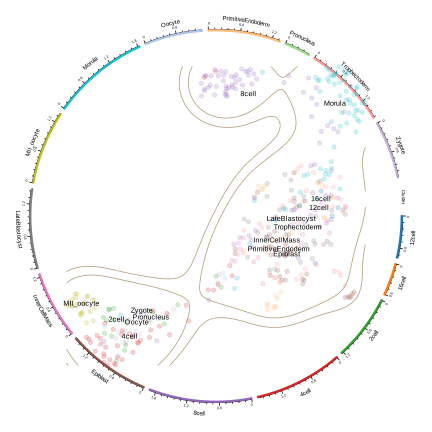
Heterogeneity - Human Heatmaps
Fig.7 Clustering plots for human preimplantation embryos, showing clustering patterns of gene expression, 3' UTR APA, and IPA across developmental stages. A species toggle button allows switching to mouse data.
Heterogeneity - Mouse Heatmaps
Fig.8 Cluster plots for mouse preimplantation embryos.

📈 Temporal Dynamics

Temporal Dynamics - Overview
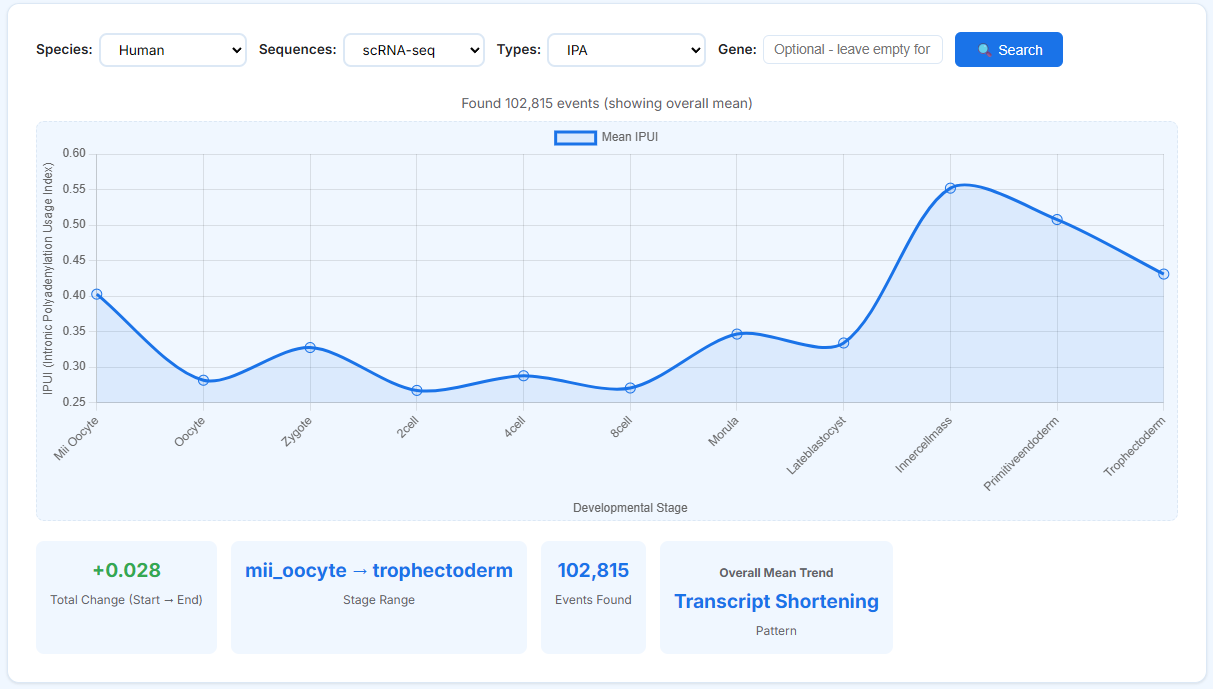
Fig.9 The Temporal Dynamics module overview. Users select species, sequencing type, and APA type to generate a mean APA usage trend line across all developmental stages.
Temporal Dynamics - APA Type View
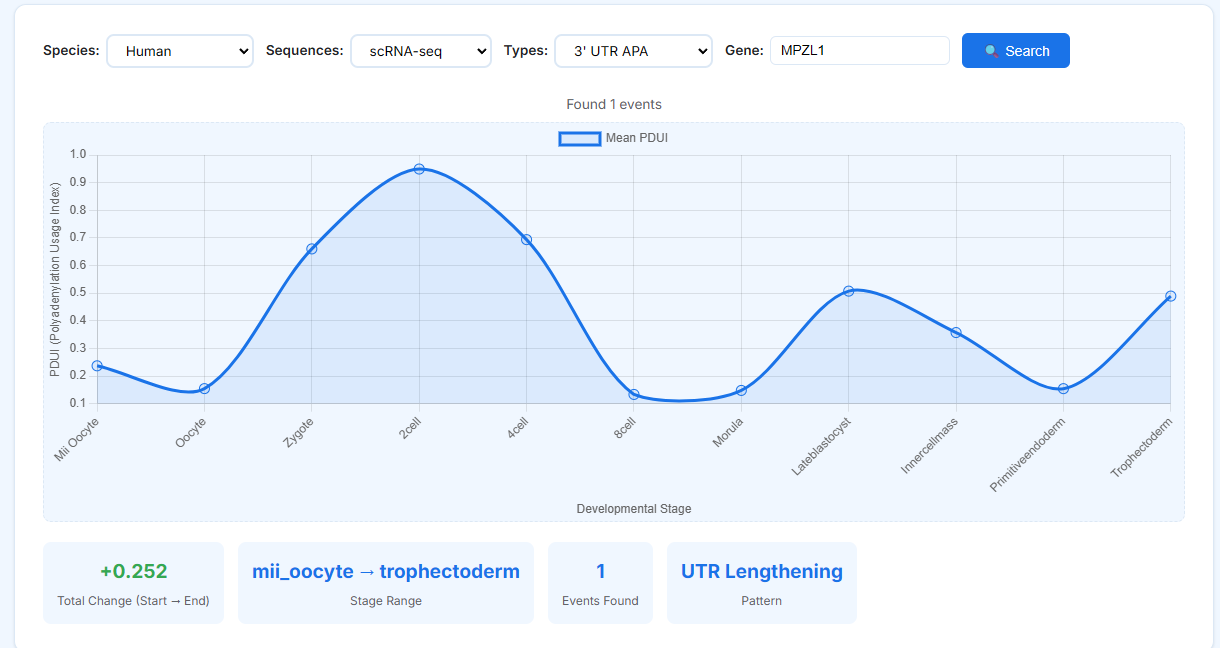
Fig.10 Enter a gene to view the changes in PDUI of corresponding 3' UTR APA events across different stages.
Temporal Dynamics - Gene-level View
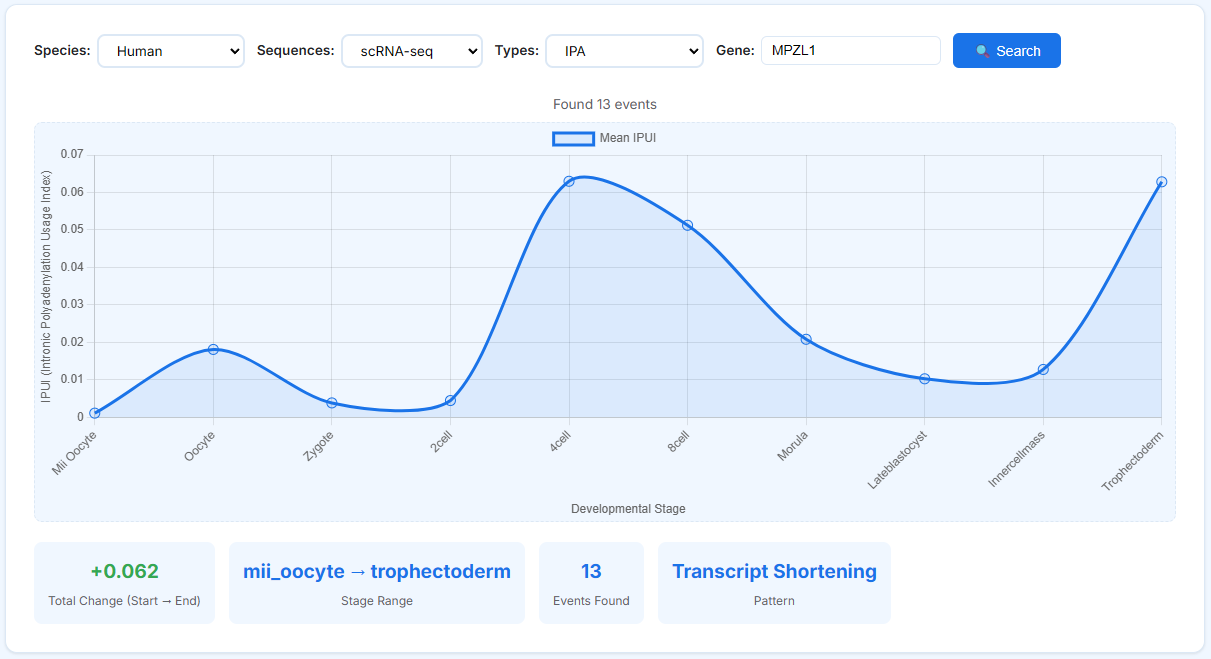
Fig.11 Mean APA usage trajectory for 3' UTR APA or IPA across developmental stages. Each data point represents the mean PDUI or IPUI value at that stage, with connecting lines showing the overall trend.
Temporal Dynamics - Stage Comparison
Fig.12 Enter a gene to view the changes in IPUI of corresponding IPA events across different stages.

📊 Data

Data - Statistics
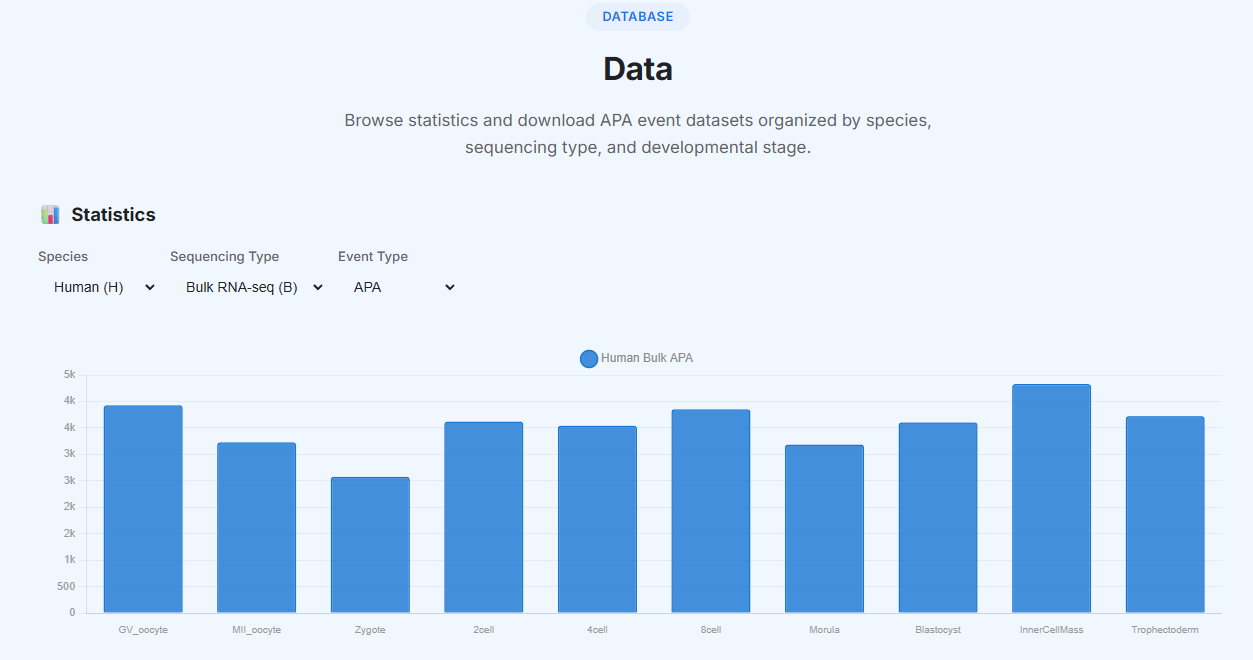
Fig.13 Event statistics across stages. An interactive bar chart showing the number of APA events per developmental stage. Filters allow users to customize the view by species, sequencing type, and event type.
Data - Data Download
Fig.14 Data Download sub-module. Pre-processed APA and IPA event files are organized by species and available for download as RAR archives. All events have passed limma correction and 60% detection rate filtering.

Frequently Asked Questions

What is alternative polyadenylation (APA)?
Alternative polyadenylation (APA) is a mechanism by which a single gene can produce multiple mRNA isoforms with different 3' ends through the use of alternative poly(A) sites. APA can occur within the 3' UTR (3' UTR APA) or within introns (intronic polyadenylation, IPA), affecting mRNA stability, localization, translation efficiency, and protein diversity.
What is PDUI?
PDUI (Percentage of Distal polyA Usage Index) is a metric ranging from 0 to 1 that quantifies the usage of distal (downstream) poly(A) sites relative to total poly(A) site usage for a gene. A higher PDUI indicates greater usage of the distal site (longer 3' UTR), while a lower PDUI indicates preferential use of proximal sites (shorter 3' UTR). PDUI is computed by DaPars2.
What is IPUI?
IPUI (Intronic Polyadenylation Usage Index) quantifies the usage of intronic poly(A) sites detected by IPAFinder. Higher IPUI values indicate greater usage of intronic poly(A) sites, which can produce truncated protein isoforms or regulate gene expression through nonsense-mediated decay (NMD).
What data sources does EmbryoAPA use?
EmbryoAPA integrates publicly available bulk RNA-seq and single-cell RNA-seq datasets from GEO, covering multiple stages of human and mouse preimplantation embryonic development. All samples are from peer-reviewed published studies.
What is the detection rate filter?
The detection rate filter requires that an APA event be detected in at least a specified fraction (default 60%) of samples within any given developmental stage. This ensures that only robustly detected events are included, reducing noise from sporadic detections.
How are differential APA events identified?
Differential APA events between two stages are identified by their quantitative values. For 3' UTR APA, DaPars2 calculates PDUI differences (ΔPDUI) between stages. For IPA, IPAFinder computes IPUI differences (ΔIPUI). Events are filtered by Detection Rate, Delta (ΔPDUI/ΔIPUI threshold), Fold Change, and FDR-adjusted p-value.
What does UTR Lengthening / Shortening mean?
In the context of 3' UTR APA, "UTR Lengthening" means the distal poly(A) site is increasingly used over developmental time (PDUI increases), resulting in longer 3' UTRs. "UTR Shortening" means the proximal site is preferentially used (PDUI decreases), producing shorter 3' UTRs. These trends are significant because 3' UTR length affects miRNA binding, protein interactions, and mRNA stability.
Can I download the raw data?
Yes. Processed APA and IPA event data (after limma correction and detection rate filtering) are available for download from the Data section as RAR archives. Differential analysis results can also be downloaded as TSV files directly from the APA Browser.
Which developmental stages are included?
Human: GV oocyte, MII oocyte, Oocyte, Pronucleus, Zygote, 2-cell through 16-cell, Morula, Blastocyst (early/mid/late), Inner Cell Mass, Primitive Endoderm, Trophectoderm, Epiblast.
Mouse: Oocyte, MII oocyte, Sperm cells, Zygote, 2-cell (early/mid/late), 4-cell, 8-cell, 16-cell, Morula, 32-cell, Blastocyst (early/mid/late), Inner Cell Mass, Trophectoderm, Cavity. Not all stages are available for every sequencing type.
How to cite EmbryoAPA?
Please cite our upcoming publication. Citation details will be provided upon publication. For now, you may reference the database URL and the Inner Mongolia Key Laboratory of Life Health and Bioinformatics.
×
Zoomed View
×
Zoomed View